One of the biggest shifts I’ve had to explain to small business owners recently is this: your website is no longer just where ads send traffic. It is now actively shaping the ads themselves.
With the evolution of Performance Max campaigns, Google is increasingly using AI to build ads dynamically using the assets you provide. But what many business owners don’t realise is that Google can now also pull images directly from your landing pages and turn them into ad creatives across Search, Display, YouTube and more .
This fundamentally changes how we should think about website design. Your landing page is no longer a passive destination. It is an active part of your advertising engine.
How Landing Page Images Power Performance Max
Performance Max campaigns operate differently from traditional Google Ads. Instead of manually building every ad, you provide Google with a pool of assets, and its AI mixes and matches them to find what performs best across channels .
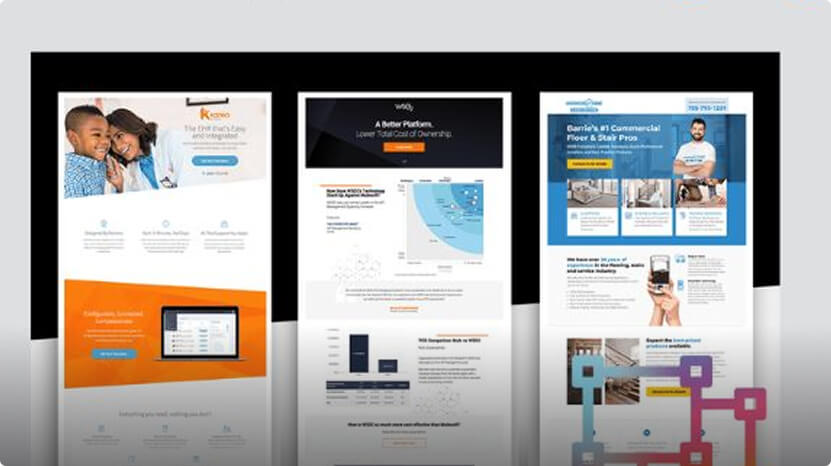
Now, with landing page image integration, that asset pool has expanded. Google can extract relevant visuals directly from your site and dynamically use them within your ads . This means your hero banners, product images, service visuals and even background imagery can all become part of your advertising without you explicitly uploading them.
What’s changed recently is visibility. Google now shows previews of how these images will appear in ads before campaigns go live, giving advertisers more control and awareness .
For small business owners, this is both a powerful opportunity and a potential risk.
The Opportunity for Small Businesses
From my perspective, this update levels the playing field. Smaller businesses often struggle to produce a wide range of ad creatives, especially if budgets are tight.
Now, your existing website content can effectively act as an expanded creative library. If your landing pages are visually strong, you suddenly have a much richer set of ad assets without additional production costs.
This allows small businesses to compete across multiple channels with far greater reach. Performance Max campaigns already distribute ads across Google’s entire ecosystem, and by leveraging landing page images, you increase the variety and relevance of those ads automatically.
In practical terms, this means better engagement, more impressions in high-value placements, and ultimately a greater chance of conversions.
The Hidden Risk, When Your Website Works Against You
However, there is a downside that I often warn clients about. If your landing page imagery is poor, inconsistent or off-brand, you are effectively feeding low-quality assets into your advertising campaigns.
Because Google’s AI selects and distributes images based on relevance and performance, it may use visuals you never intended to appear in ads. This can lead to mismatched messaging, diluted branding, or even unprofessional ad appearances.
In the past, you could separate your website design from your ad creatives. That separation no longer exists. Your website is now directly influencing how your ads look and perform.
For small businesses, this means that neglecting your website visuals is no longer just a UX issue. It is a paid media issue that can directly impact your return on investment.
How I Help Small Businesses Leverage This Shift
At SEO North Sydney, I approach Performance Max campaigns with a combined lens of website optimisation and ad strategy.
The first step is auditing landing page imagery. I look at whether images are high quality, relevant to the service or product, and aligned with the brand. Every image on the page must be treated as a potential ad creative.
Next, we refine the structure of the page. Clear sections, strong visual hierarchy and consistent branding make it easier for Google’s systems to extract meaningful and effective visuals.
Then we test. Because Performance Max provides insights into which assets perform best, we can identify which images drive engagement and conversions, and refine both the ads and the website accordingly.
This creates a feedback loop where your website improves your ads, and your ad performance informs how you improve your website.
Why This Signals a Bigger Shift in PPC
What we are seeing here is part of a broader trend. Google is moving towards a fully integrated, AI-driven advertising ecosystem where the boundaries between website, creative and campaign are increasingly blurred.
Performance Max already uses AI across bidding, targeting and creative optimisation. The addition of landing page images simply reinforces the idea that your inputs matter more than ever. The better your inputs, the better the output.
For small business owners, this is actually good news. You do not need to outspend competitors. You need to out-prepare them. A well-structured website with strong visuals can outperform a larger competitor with sloppy assets.
Why Small Businesses Should Act Now
If you are running or considering Performance Max campaigns, now is the time to rethink your website.
Ask yourself whether your landing pages are visually strong, consistent and aligned with your brand. Consider whether every image supports your message and could stand alone as an ad creative.
Because in today’s environment, that is exactly what is happening.
At SEO North Sydney, I see this as one of the most practical ways small businesses can improve PPC performance without increasing spend. By refining your landing pages, you are not just improving user experience. You are directly enhancing your advertising capability. And in a landscape where AI is doing more of the heavy lifting, the businesses that provide the best inputs will always get the best results.